
NMF SCIENCE EDUCATION
What Is
Neuromyofascial
Science?
A patient-specific clinical framework developed by Dr. G. Blair Lamb that works to map the specific anatomical factors associated with chronic pain, neurological dysfunction, and complex conditions.
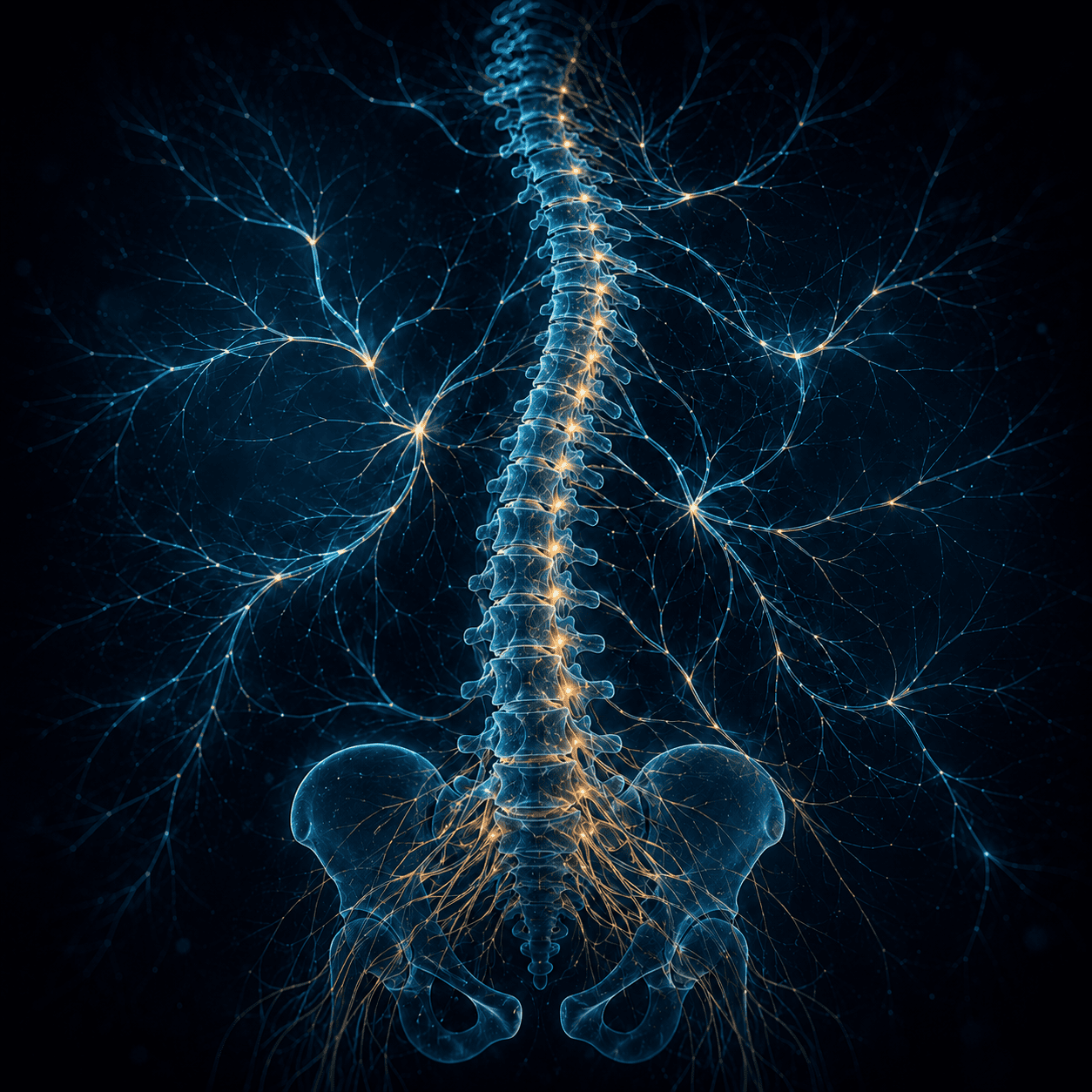
Mapping the patient, not just the diagnosis.
Many patients receive a label for their symptoms. But a label does not always explain where symptoms are coming from, why they persist, or why standard care has not produced the expected recovery. Neuromyofascial Science was developed to address that gap. It asks a different question: what injury patterns, tissues, and neural pathways may be contributing to this individual’s symptoms? The goal is a more precise map so care can become more targeted and individualized.
Neuro
Nerves, nerve roots, spinal cord mechanics, neural signaling, and nerve irritation patterns contributing to symptoms.
Myo
Muscle tone, spasm, motor dysfunction, chronic shortening, and motor consequences of nerve irritation.
Fascial
Fascia, connective tissue, soft tissue restriction, fibrosis, scarring, and mechanical continuity across the body.
The Audit
History, examination, and confirmation are used to build a patient-specific injury map that can inform more targeted care.
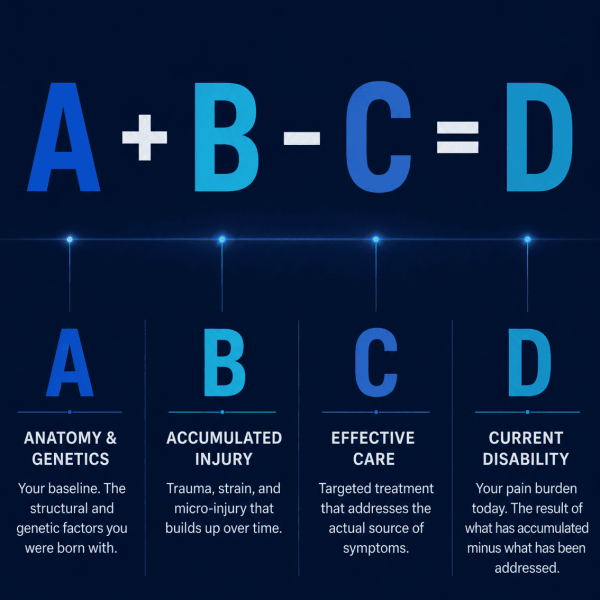
THE PAIN EQUATION
A + B - C = D
Dr. Lamb’s framework is built on a straightforward idea. Anatomy and genetics, plus accumulated injury over time, minus effective care, equals current disability and pain burden. The neuromyofascial audit investigates what may be contributing to symptoms rather than addressing them at the surface level.
- A = Anatomy and genetics
- B = Accumulated injury and trauma over time
- C = Effective, targeted care
- D = Current disability and pain burden
THE FRAMEWORK IN ACTION
Explore the Conditions We Investigate
NMF Science applies this framework across a range of conditions where neuromyofascial factors may contribute to symptoms that standard workups have not fully explained.
-
Chronic neurological and musculoskeletal conditions examined through a single framework
-
Patient-specific investigation regardless of diagnosis or prior treatment history
-
Structural and neuromyofascial factors investigated where standard workups stop