CONDITIONS

Multiple Sclerosis

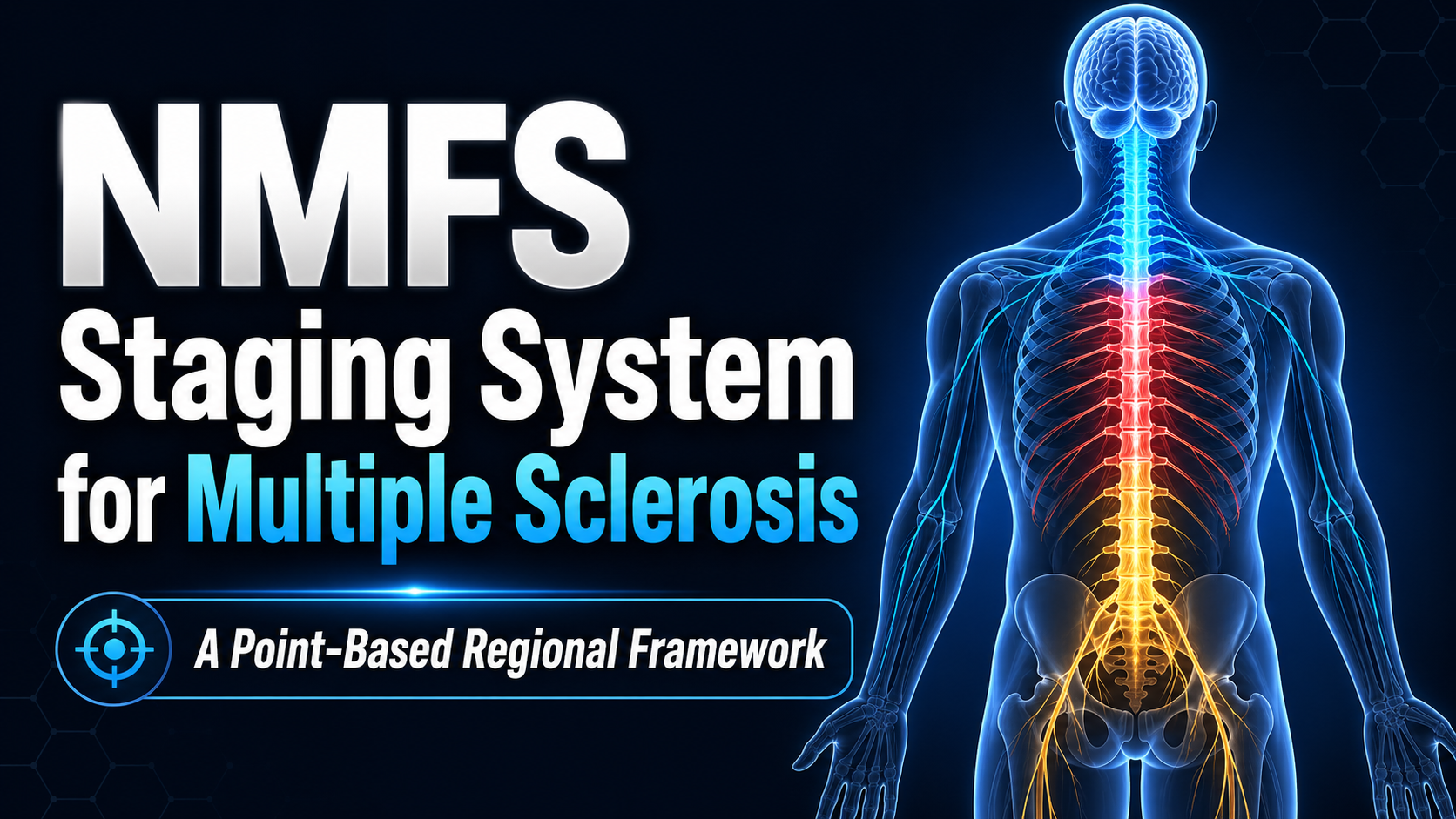
Multiple Sclerosis is one of the most complex and debated neurological conditions in medicine. Standard care frames it as an autoimmune disease where the immune system attacks nerve tissue, creating inflammation and scarring that disrupts nerve signaling. NMF Science asks a deeper investigational question: could mechanical spinal pathology, accumulated injury, and neuromyofascial tethering be contributing to or amplifying the symptoms attributed to MS? This is not a challenge to the neurological diagnosis. It is an additional layer of investigation that standard workups are not currently designed to capture.

Current Medical Understanding

Multiple Sclerosis affects the brain, spinal cord, and optic nerves. The immune system attacks the protective myelin sheath surrounding nerve fibers, creating lesions that disrupt the transmission of nerve signals. Symptoms vary widely from person to person and may include vision changes, weakness, numbness, tingling, balance problems, fatigue, bladder and bowel dysfunction, and pain.

Diagnosis requires a rigorous clinical process including detailed patient history, MRI imaging of the brain and entire spine, spinal fluid analysis, and in some cases specific antibody testing. Treatment focuses on immune-modifying medications, steroid therapy during acute relapses, and long-term symptom management.

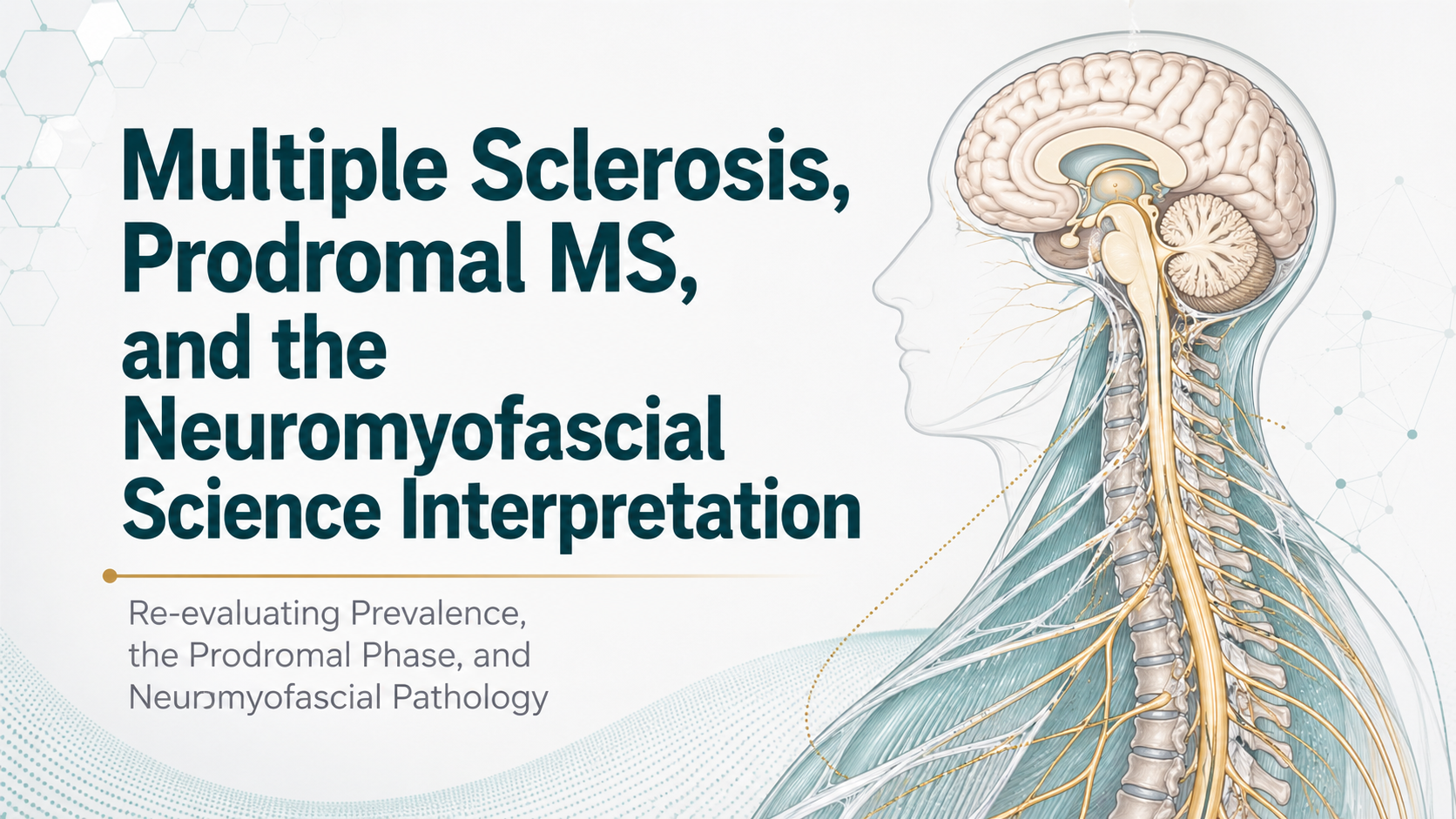
One of the most significant challenges in MS care is the prodromal phase. This is a period of years or even decades during which symptoms are present but not yet specific enough to meet the formal diagnostic threshold. Clinical observations suggest that many people who eventually receive an MS diagnosis look back and recognize unexplained symptoms that were present five, ten, or even twenty years earlier. These early signs, including chronic fatigue, bowel dysfunction, sensory abnormalities, and widespread pain, are common across many conditions, which is part of what makes early recognition so difficult.

NMF Science Perspective

NMF Science does not replace neurological care for MS. What it does is ask a structural and mechanical question that standard MS workups are not designed to answer: could physical spinal injury, accumulated over time, be contributing to or amplifying the neurological symptoms a patient is experiencing?

The NMF Science framework investigates whether mechanical spinal tethering, often the result of prior acceleration-deceleration injury such as a car accident or high-impact sports trauma, may be a hidden driver of complex neurological symptoms. Soft tissue scarring embedded in the cervical or thoracic spine can create traction on nerve roots or the spinal cord itself. That mechanical pulling can mimic or worsen the symptoms of central demyelinating disease, and it will not appear on standard MRI protocols designed to identify lesions.

Three clinical patterns are particularly relevant to this investigational lens.

The Neuromyofascial Spectrum

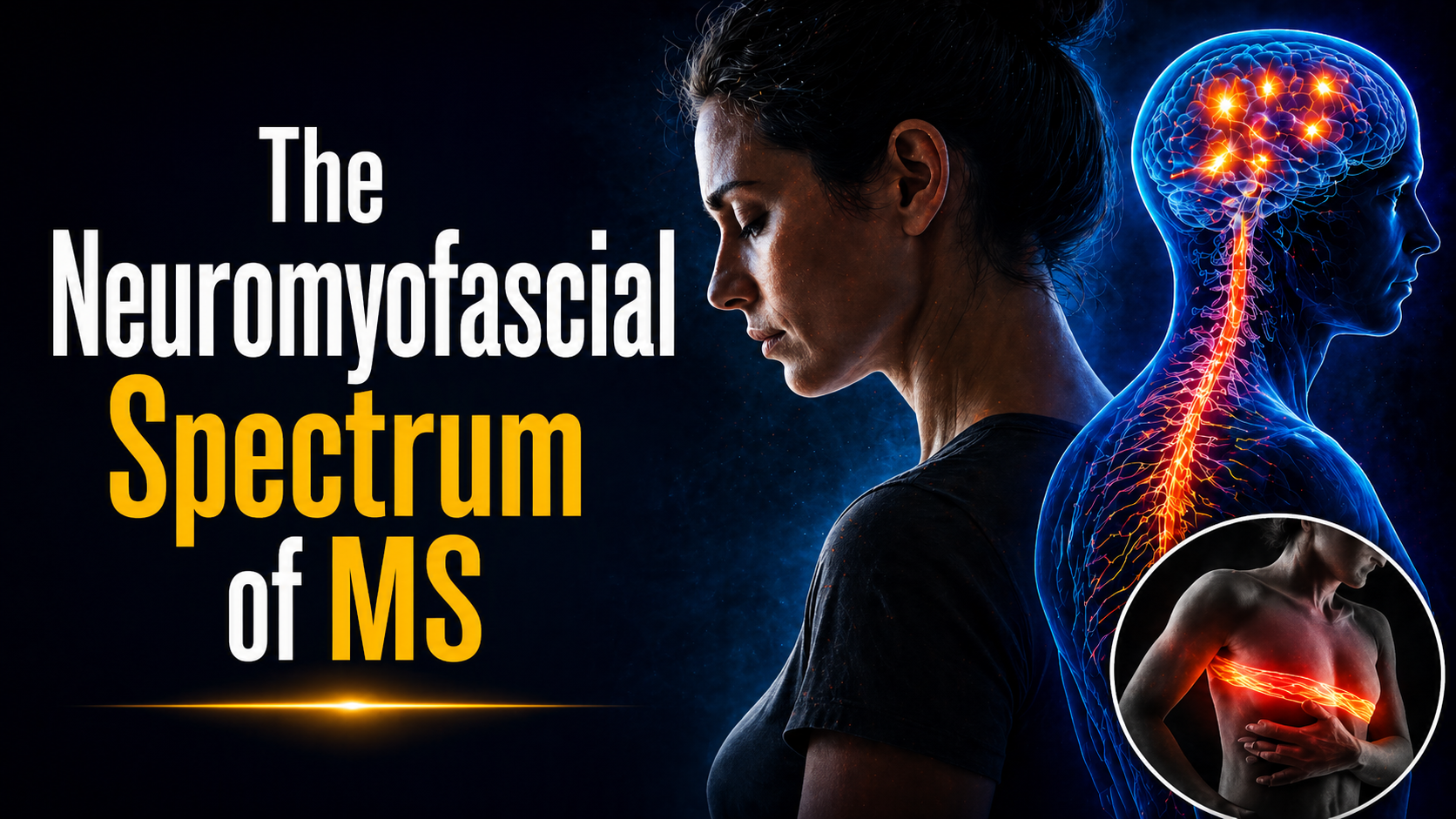
Clinical observations suggest that conditions including post-concussion syndrome, complex whiplash, fibromyalgia, and MS share extensive symptomatic overlap and frequently share a history of significant physical trauma. NMF Science proposes these may not be entirely isolated diseases but rather progressive stages on a shared, mechanically driven continuum of injury.

The MS Bear Hug

This widely reported symptom, a tight constrictive band-like pressure wrapping around the torso, is typically attributed to lesion-based nerve pain in conventional MS care. The NMF Science framework identifies it as a potential thoracic neuropathic issue. Acceleration-deceleration injuries can cause retrolisthesis, a backward slippage of the thoracic vertebrae, which tethers the exiting nerve roots. Those tethered nerve roots transmit signals that wrap forward around the ribs. The brain interprets them as crushing chest pain or cardiac distress, even when the heart and lungs are entirely healthy. Because the patient feels the pressure in their chest rather than their back, the underlying spinal injury remains hidden without a targeted structural assessment.

The Fibro-MS Overlap

Clinical observations indicate that when looking back five to fifteen years into the medical histories of diagnosed MS patients, there is very often a preexisting fibromyalgia-like pain syndrome already present. NMF Science uses the term fibro-MS to describe this pattern, suggesting that in some patients fibromyalgia may represent a prodromal phase on the path to MS-spectrum diagnosis. The shared symptom pool between the two conditions is extensive, including migraines, jaw pain, profound fatigue, chronic limb weakness, eye pain, numbness, tingling, TMJ symptoms, and irritable bowel dysfunction. Clinical observations also note that approximately 80% of these dual-profile patients are female and frequently present with joint hypermobility, which may increase spinal vulnerability to mechanical tethering during injury events.

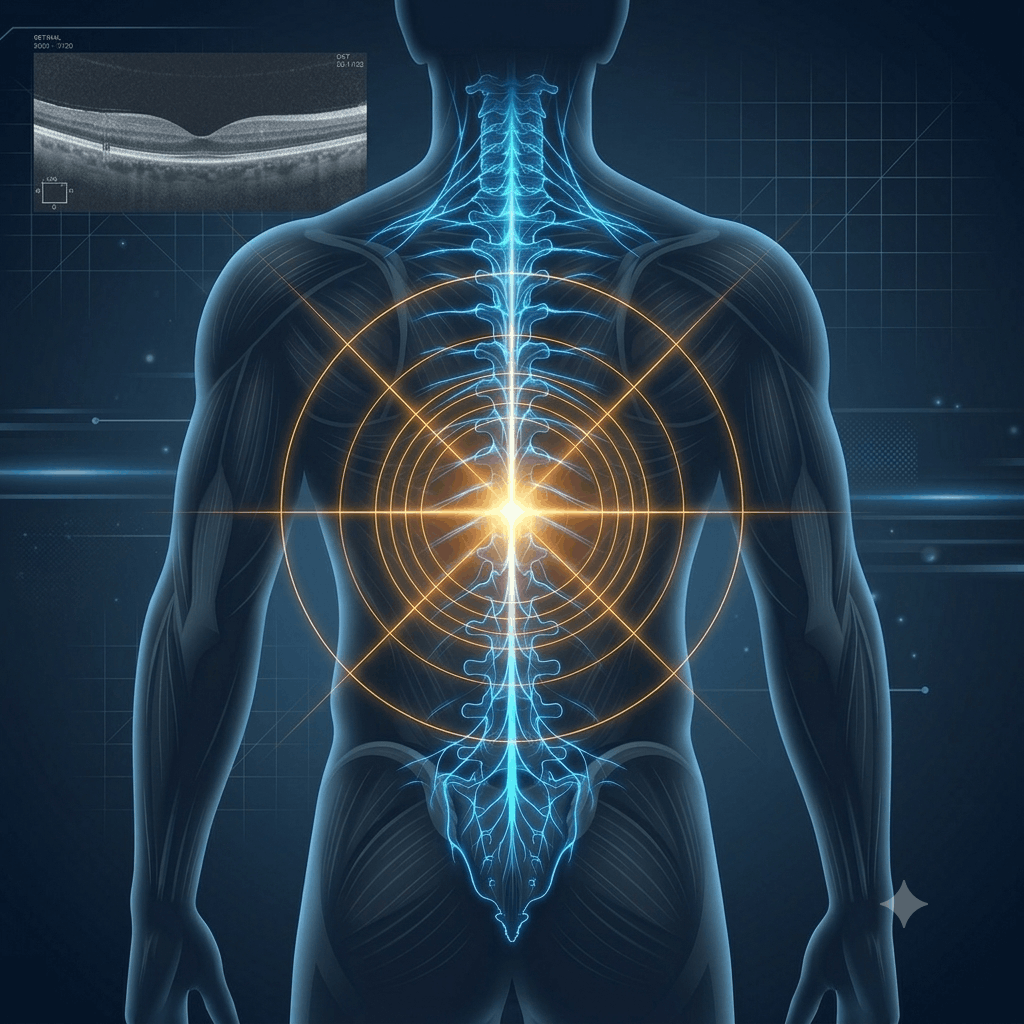
A further objective finding connecting mechanical spinal injury to MS-related symptoms comes from optical coherence tomography, or OCT. This imaging tool measures the microscopic thickness of the retinal nerve fiber layer. Clinical research consistently documents retinal thinning in MS patients. That same retinal thinning has been observed in patients with whiplash, TMJ disorders, and post-concussion syndrome, in patients without an MS diagnosis. This pattern suggests the thinning may in some cases be a consequence of mechanical traction rather than demyelination alone. A tethered or scarred spinal cord may pull tension upward through the optic nerve, physically stressing retinal tissue from the inside out.

This does not mean MS is not real. It means there may be additional structural and neuromyofascial factors contributing to a patient's symptom burden that are worth investigating alongside their neurological care.

Shannon: A Clinical Case Observation

Shannon had lived with a formal MS diagnosis for 17 years. Facing severe and progressive disability, her symptom map at initial assessment included partial blindness in her left eye from optic neuritis, constant left-sided migraines, the MS hug, left-sided weakness, vertigo, and incontinence. She had been regularly followed at a tertiary MS clinic and treated with standard immunotherapies. Despite this, she remained highly disabled.

Her history included a head-on motor vehicle collision years earlier that produced an asymmetric, high-impact whiplash injury to the left side of her cervical and thoracic spine. The left-dominant pattern of her neurological symptoms mapped closely to that injury history.

Following comprehensive neuromyofascial mapping in October 2022, Shannon received a targeted TNPC intervention in December 2022. The intervention focused on the left-sided cervical, thoracic, and lumbar regions with the goal of addressing the deep fibrosis and spinal tethering identified through the audit process.

The outcomes were clinically striking. Shannon reported an immediate reduction in headache severity, resolution of the MS hug, and restoration of vision in her left eye. Within four weeks she had regained full motor power on her left side, normalized continence, and reported a pain score of zero. Her functional gains remained stable for over a year.

For context, spontaneous relapse recovery in MS typically unfolds over three to six months and often plateaus. Shannon's functional return occurred in under thirty days across visual, motor, and autonomic domains simultaneously.

This is a single clinical case observation. It does not establish that neuromyofascial pathology is the universal cause of MS, nor does it imply a cure for the underlying autoimmune disease process. What it does suggest is that in some patients, a treatable mechanical pathology may be superimposed on the neurological diagnosis. Identifying and addressing that mechanical layer through precise neuromyofascial mapping may significantly reduce the symptom burden attributed to MS.

What We Investigate

→ History of acceleration-deceleration injury such as motor vehicle collisions or high-impact sports trauma, particularly events occurring years before neurological symptoms appeared.

→ Thoracic spinal pathology including retrolisthesis and nerve root tethering as a potential structural driver of the MS bear hug sensation.

→ Cervical and upper thoracic fibrosis patterns and whether spinal cord tethering may be contributing to limb weakness, numbness, or motor dysfunction.

→ Prodromal symptom clustering including chronic fatigue, bowel dysfunction, sensory abnormalities, and widespread pain that preceded formal MS diagnosis by years or decades.

→ Fibromyalgia-like pain patterns appearing five to fifteen years before MS diagnosis, suggesting possible shared neuromyofascial spectrum involvement.

→ Presence of dystonia in the deltoids, forearms, and thighs as a clinical indicator of chronic neuromyofascial involvement.

→ Whether symptom distribution follows spinal nerve patterns rather than or in addition to demyelinating lesion patterns.

→ Joint hypermobility as a potential factor increasing spinal vulnerability to mechanical tethering following injury events.

→ OCT findings including retinal thinning and whether these correlate with a history of mechanical spinal injury rather than or alongside demyelination.

→ Treatment response patterns: whether specific symptoms improve with targeted neuromyofascial intervention alongside conventional neurological care, and what that response reveals about the structural contribution to the overall symptom map.

Learn More About MS

Below you will find our most comprehensive educational resources on MS and the NMF Science perspective. Explore detailed video explanations, clinical slideshows, patient observations, podcasts, and in-depth articles examining what the neuromyofascial investigational framework adds to our understanding of this complex condition.

Videos

Slideshows

Podcasts

Social Media Videos

Blog Posts