PATIENT SUCCESS STORIES

David: From FSHD Disability to Functional Restoration

How neuromyofascial assessment revealed a treatable mechanical layer beneath genetically confirmed facioscapulohumeral muscular dystrophy

I was one of those people who had pretty much every symptom in the book. I was dealing with chronic migraines, constant tinnitus in both ears, cognitive fog, significant weakness in the upper and lower extremities.

These events really knocked me down a few notches. But there's much more reason to believe that we can still make some progress. And it feels great.

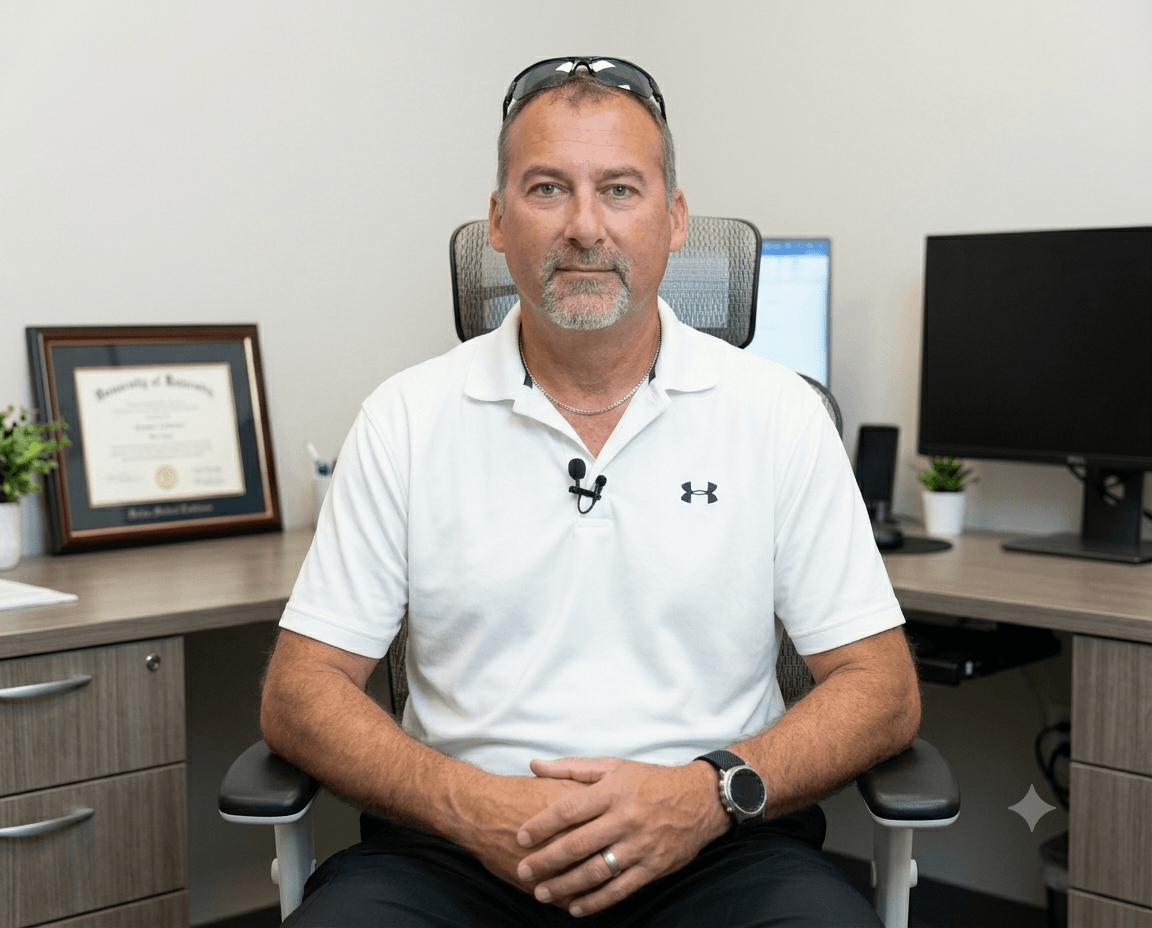
David

NMF Science patient

Genetically Confirmed FSHD
50-year-old teacher and former athlete
  • Genetically confirmed facioscapulohumeral muscular dystrophy (FSHD)
  • Father and both brothers also affected with variable severity
  • Post-concussion syndrome from traumatic hockey coaching fall 7 years prior
  • Constant bilateral tinnitus and light sensitivity
  • Chronic migraines and cognitive fog
  • Bilateral shoulder weakness with scapular winging
  • Intermittent foot drop, leg heaviness, fatigue
  • Unable to walk significant distances or play golf
  • Progressive weakness despite standard supportive care
A Physical Trauma Years Before
  • History of head-on motor vehicle collision (around 2005)
  • Asymmetric whiplash injury to left cervical and thoracic spine
  • Left-dominant symptom pattern mapped precisely to injury location
  • Additional history of multiple concussions
  • Family history of progressive MS (brother, 20-year course)
Neuromyofascial Mapping Reveals
  • Dense post-traumatic scarring in cervical and thoracic spine
  • Central spinal tethering and multi-level segmental dysfunction
  • Functional spinal stenosis (mechanical narrowing from muscle/fascia)
  • Myofascial restriction and fibrosis affecting nerve function
  • These mechanical findings may contribute to or amplify neurological symptom burden
  • Hidden pathology undetectable on standard MRI or CT imaging

Featured Case Report & Video

From Disability to Function: David's FSHD Story

David is a 50-year-old teacher and former athlete who had been living with genetically confirmed facioscapulohumeral muscular dystrophy (FSHD) for years. His father and both brothers carry the same genetic diagnosis, though the severity varies among family members.

Seven years before coming to Dr. Lamb’s clinic, David suffered a traumatic fall while coaching hockey. The fall triggered post-concussion syndrome that persisted and worsened over time. Sometime after this injury, he began experiencing progressive upper and lower limb weakness. What started as isolated symptoms evolved into a complex clinical picture: constant bilateral tinnitus, severe light sensitivity, chronic migraines, cognitive fog, and profound muscle weakness that limited nearly every aspect of his life.

FSHD is a progressive genetic disorder affecting approximately 12 in every 100,000 people. It causes weakness in the facial muscles, shoulder muscles, and the muscles that control ankle movement. FSHD has no approved disease-modifying therapy. As of 2025, there is no cure. Standard care is supportive only. Patients are expected to experience progressive decline.

David’s doctors expected his condition to worsen over time. There were no medical interventions that could stop or reverse the weakness.

The Initial Assessment: What Was Actually Wrong

When David came to Dr. Lamb in July 2022, his functional limitations were severe. His shoulders were so weak he could only lift his arms sideways to about 50 to 80 degrees. He could not raise them overhead. He had bilateral foot drop affecting his walking. His legs felt heavy. He could not climb stairs easily or walk long distances. He could not play golf, something he had once enjoyed. He experienced constant migraines, light sensitivity, tinnitus in both ears, and cognitive difficulties.

From a standard neurological perspective, this was simply FSHD progressing as expected.

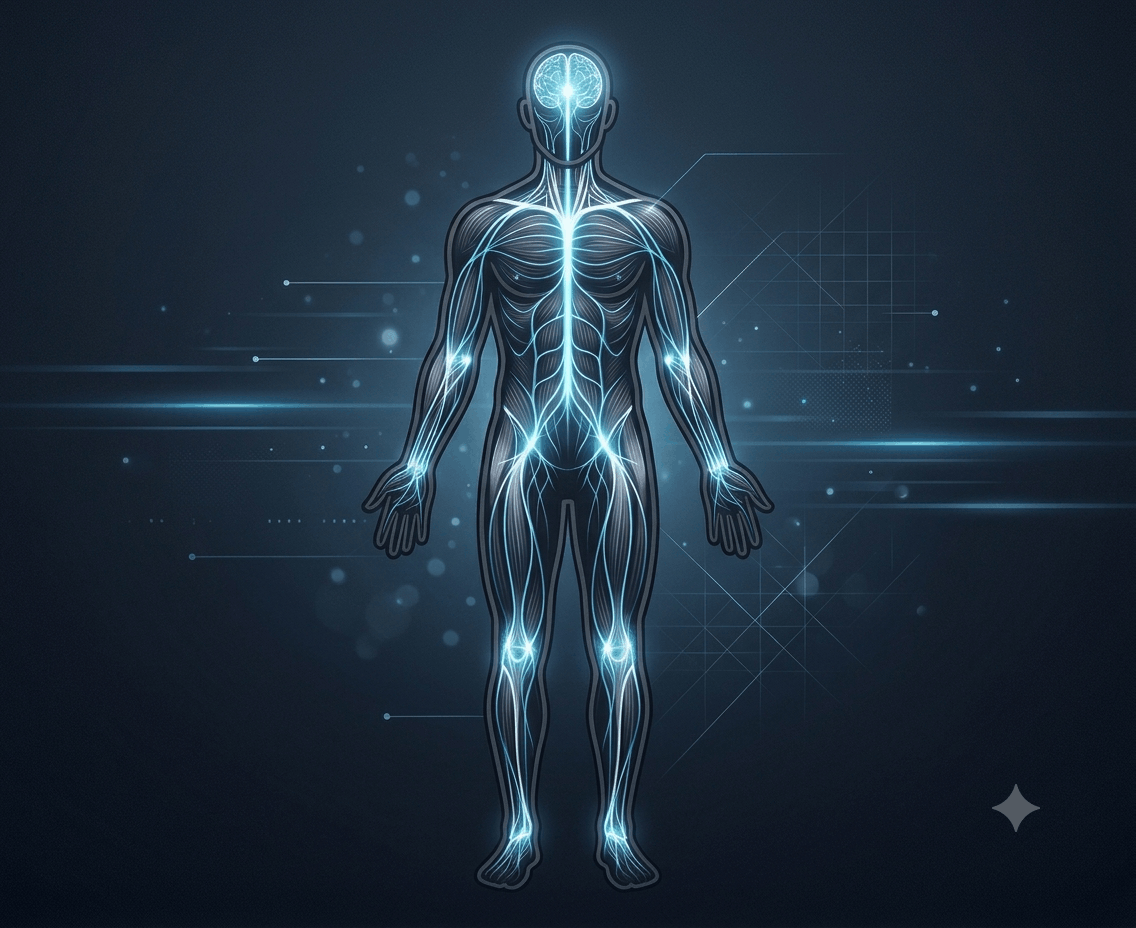
But Dr. Lamb performed something beyond a standard neurological exam. He conducted a structured Neuromyofascial Audit, a systematic assessment designed to identify hidden injury patterns that conventional imaging does not reveal. The audit involves detailed examination of the spine, muscles, fascia, and neurological structures to map where mechanical restriction and scarring might be contributing to symptoms.

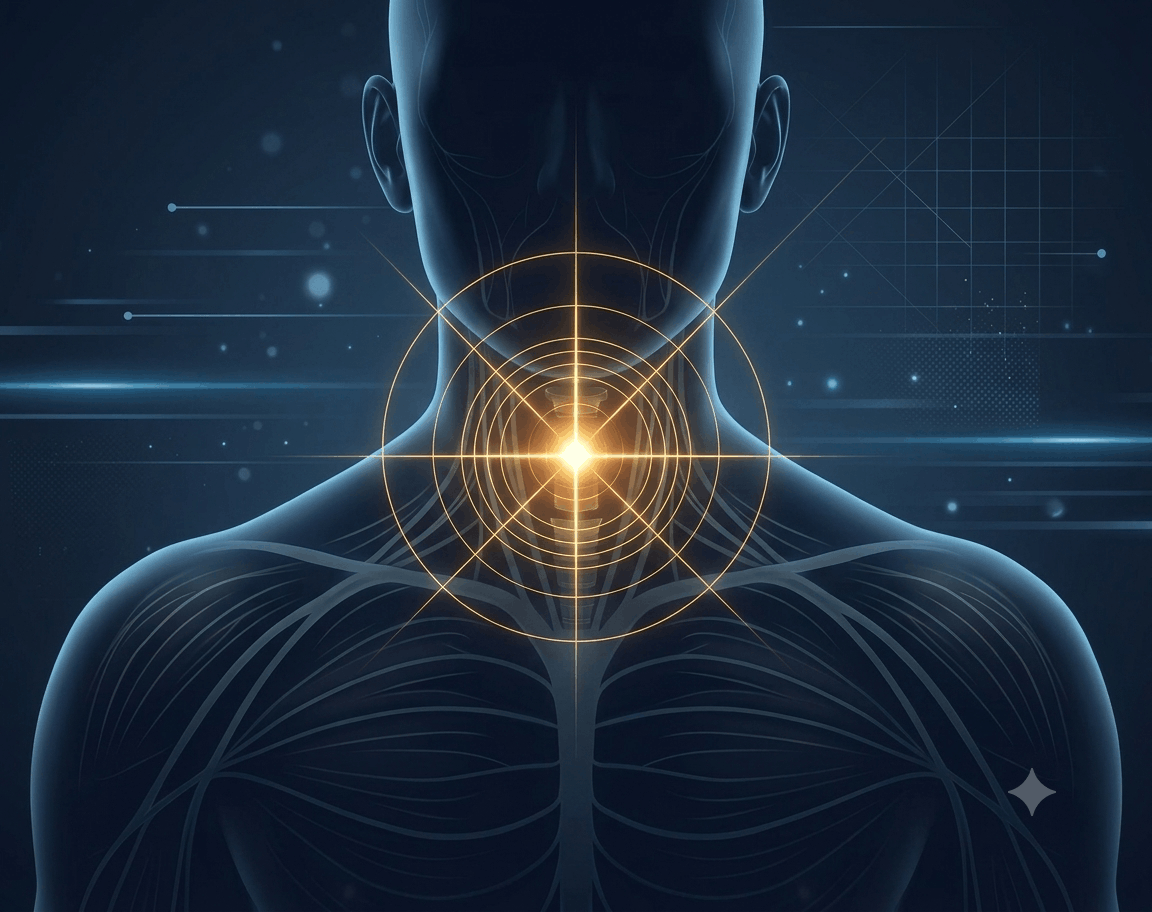
What Dr. Lamb found was significant: dense post-traumatic scarring in David’s cervical and thoracic spine from his hockey injury seven years earlier. This scarring had created functional spinal stenosis (narrowing of the spinal canal from muscular and fascial restriction rather than bone overgrowth) and central spinal tethering. These mechanical problems were undetectable on standard MRI or CT imaging.

Dr. Lamb’s hypothesis was straightforward: While FSHD is a genetic condition that cannot be cured, David’s functional decline was being amplified by treatable mechanical pathology from his previous injury. If that mechanical component could be released, significant function might be restored.

The Treatment and Immediate Response

On July 2022, David underwent targeted Transcutaneous Neuromyofascial Precision Surgery (TNPS). The procedure uses specialized 0.25 millimeter instrumentation to safely release areas of fibrosis, decompress tethered nerve structures, and restore segmental spinal mobility. The session lasted approximately 30 minutes.

Within 30 minutes of the procedure, David demonstrated immediate functional restoration.

In the video recorded immediately after treatment, Dr. Lamb asks David to lift his right arm sideways. Where David had been able to lift only to 50 to 80 degrees moments before, he now raises his arm straight to the side and holds it fully overhead. Then the left arm. Same result. Full range of motion. Full control.

Dr. Lamb’s observation in the video: “He can hold it up. He couldn’t do that before.”

But the improvements did not stop there.

Within 40 minutes of treatment, David continued to improve. In the follow-up video, Dr. Lamb notes: “He continues to improve. He’s been monitoring him for the past 20 minutes and he’s improving minute by minute.”

David reported that not only had his shoulder strength returned, but his vision felt clearer. His constant headaches had significantly reduced. The tinnitus that had been constant for years was markedly improved.

The Sustained Recovery

Three years later, through 2025, David’s functional improvements have not only persisted but have continued to consolidate.

He can now play golf approximately once per week. This was completely impossible before treatment.

He walks significantly longer distances without fatigue.

His daily activities have improved across the board. He is sleeping better. His cognitive clarity has improved. The constant presence of headaches and tinnitus that had dominated his life for years is greatly reduced.

His strength and shoulder range of motion remain full. The foot drop has not returned.

He has received periodic maintenance treatment approximately every six months to sustain these gains, particularly as he has returned to more active pursuits including sports.

What This Means

FSHD is a genetic condition. Treatment with TNPS does not cure FSHD or reverse the underlying genetic mutation. David’s genetic diagnosis has not changed.

What has changed is that a significant mechanical contributor to his disability has been identified and addressed.

Dr. Lamb’s clinical interpretation is that FSHD may create vulnerability to certain types of spinal restriction and tethering, particularly when superimposed with prior injury. While the genetic myopathy itself cannot be modified, the mechanical spinal pathology that compounds the disability can be.

This case suggests something important: In patients with neuromuscular genetic diseases like FSHD, there may be a layer of mechanical pathology that is modifiable. Identifying and treating that mechanical component can restore function that appears to be permanently lost but may not be.

Notably, one of David’s family members, also genetically confirmed with FSHD and experiencing similar symptoms, also underwent TNPS and experienced similar meaningful functional improvements. This suggests the pattern may be recurring rather than coincidental.

A Second Chance

David had accepted that his FSHD would progressively worsen, that his disability would increase, and that functional restoration was not possible. The standard medical understanding of FSHD supported this expectation.

But identifying the hidden mechanical contributor changed everything.

Three years post-procedure, David has his quality of life back. He plays golf. He walks. He sleeps better. His cognitive clarity has returned. His constant headaches and tinnitus are manageable rather than dominating.

He got a second chance he was not expecting.

Clinical Context and Important Limitations

This is a single clinical case observation. It does not establish that neuromyofascial pathology is the universal cause or contributor to FSHD, nor does it imply that targeted intervention reverses or cures the underlying genetic condition.

David’s outcome represents one patient’s experience. FSHD is a genetically progressive disorder and the underlying genetic mutation is not changed by neuromyofascial intervention. What may change is the mechanical component that compounds disability.

Different patients at different disease stages, with different prior injury histories and anatomical variations, may experience different outcomes. The dramatic immediate improvements David experienced should not be expected as a standard outcome for all FSHD patients.

The speed of improvement observed in David, immediate restoration of function within 30 minutes, is notable because FSHD is not known to spontaneously improve dramatically with any known treatment. However, this single case cannot be generalized to all individuals with FSHD.

This case is presented as a hypothesis-generating clinical observation suggesting that mechanical and neuromyofascial factors may contribute significantly to disability in some patients with FSHD. Further controlled research in larger, prospective cohorts is needed to investigate prevalence, mechanisms, appropriateness of patient selection, and long-term durability of such interventions in FSHD populations.

David’s care included both targeted intervention and ongoing periodic maintenance treatment. The relative contributions of initial intervention versus periodic maintenance care to sustained long-term stability have not been separated.

If you are living with FSHD or other neuromuscular conditions, continue to work with your neurologist and primary care team. This content is educational and informational only and does not constitute medical advice or a treatment recommendation.

In David's Own Words

In a recent interview, David shared his perspective on his journey with FSHD and the impact of treatment.

On His Pre-Treatment Life

“Well, I was one of those people who had pretty much every symptom in the book. I was dealing with chronic migraines, constant tinnitus in both ears, cognitive fog, significant weakness in the upper and lower extremities.”

The Combined Impact

“I was a fairly, fairly positive person. And these, these events happened. They really knocked me down a few notches.”

On His Current Status

Despite the severity of FSHD and the challenges he faced, David expressed cautious optimism about his progress: “I can’t say I climbed all the way out of that. But there’s much more reason to believe that we can still make some progress.”

His Overall Assessment

When asked how he feels about where things stand now, David’s response was direct and powerful: “And it feels great.”

Full formal case report documenting David’s FSHD diagnosis, neuromyofascial audit findings, TNPS intervention protocol, functional outcomes measured over 3 years, and clinical discussion of findings within the context of FSHD natural history.


Learn about the neuromyofascial science approach to assessment and how mechanical spinal pathology may contribute to symptom burden in neurological conditions like FSHD. Understand the mechanisms, terminology, and clinical reasoning behind Dr. Lamb’s assessment and treatment methodology.

Peer-reviewed research summaries, case studies, and systems-informed approaches to managing complex neuromuscular disability. Browse clinical documentation related to FSHD, facioscapulohumeral muscular dystrophy, and other genetic neuromuscular conditions.


Watch additional patient stories, condition explainers, and educational content from Dr. Lamb and the NMF Science team exploring the neuromyofascial approach to complex chronic conditions. Video coming July 2026.


KEY TAKEAWAYS

What David’s Story Suggests

David’s case raises important questions about the role of mechanical and neuromyofascial factors in genetic neuromuscular diseases like FSHD:

Patients with genetic neuromuscular disorders may have superimposed mechanical pathology that is identifiable and potentially treatable through systems-informed assessment.

In David’s case, bilateral shoulder weakness and foot drop mapped to cervical and thoracic mechanical pathology from a prior head injury, suggesting the mechanical history was clinically relevant.

Immediate functional improvements following mechanical intervention, followed by sustained gains over 3 years, suggest that released mechanical restriction may create conditions for neurological recovery.

Response to intervention varies by patient, disease stage, and mechanical factors present. Outcomes are not guaranteed and should not be generalized.

A systems-informed approach that identifies mechanical contributors alongside standard neurological care may enhance quality of life and functional capacity in selected patients with neuromuscular diseases.

These observations suggest further research is warranted to investigate neuromyofascial factors in FSHD populations and to identify which patients might benefit from this approach.

CALL-TO-ACTION

Learn More About FSHD and Neuromyofascial Science

If you are living with FSHD, another muscular dystrophy, or other complex neuromuscular symptoms, understanding the role of mechanical and neuromyofascial factors may be relevant to your care.

Explore the FSHD Condition Page for detailed information about the neuromyofascial approach to muscular dystrophy, the Clinical Resources page for peer-reviewed research and additional case studies, and Dr. Lamb’s educational content for deeper understanding of mechanisms and assessment.

For clinical inquiries or collaboration, visit the Collaborate page or contact our team for practitioner-focused information.

Educational Disclaimer

This content is provided for educational and informational purposes only and does not constitute medical advice, diagnosis, or treatment recommendation.

David’s case represents a single patient’s experience with genetically confirmed FSHD. The outcomes described should not be generalized to all patients with FSHD or other neuromuscular conditions. Response to assessment and intervention varies based on individual factors including disease stage, prior trauma history, genetic presentation, mechanical pathology present, and other variables.

If you are experiencing symptoms of FSHD or other neuromuscular conditions, please consult with your neurologist, primary care physician, or other qualified healthcare provider. Continue any prescribed treatments and follow-up care with your medical team.

NMF Science does not provide medical treatment, clinical consultations, diagnoses, or personal medical advice to patients. This content is educational only.

WHERE TO BEGIN

Start Here

What is Neuromyofascial Science?

A precision-based clinical framework developed by Dr. G. Blair Lamb to map the specific anatomical drivers behind chronic pain, neurological dysfunction, and complex conditions. NMFS goes beyond diagnosis to investigate what is actually generating your symptoms and why.

What is TNPC?

Transcutaneous Neuromyofascial Precision Care is a proprietary approach developed by Dr. G. Blair Lamb to address the specific sites of pathology identified through the neuromyofascial mapping process. TNPC encompasses a range of precision-based interventions tailored to each patient’s unique map, working to address structural drivers at their source rather than managing symptoms alone.

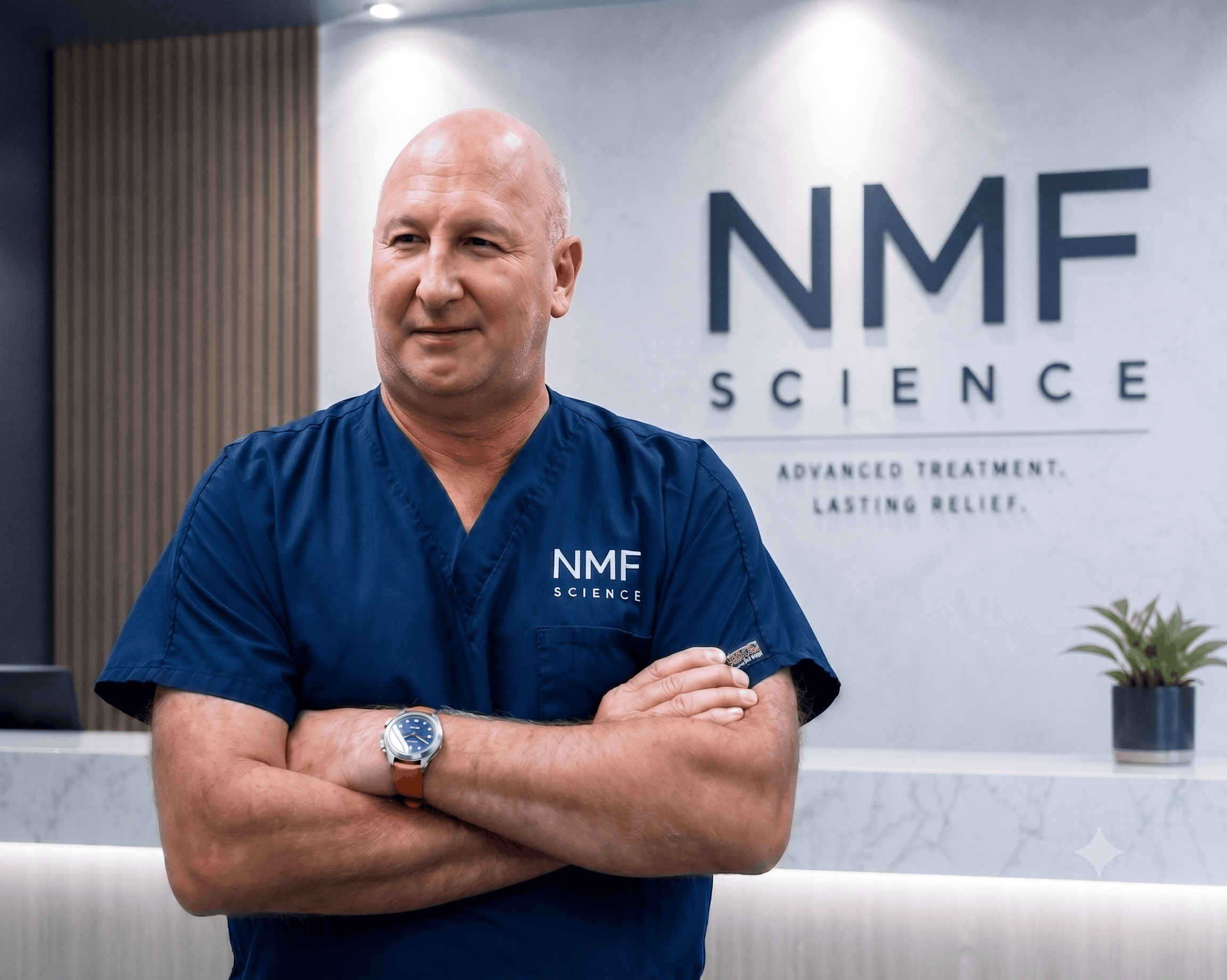
About Dr. G. Blair Lamb

Dr. G. Blair Lamb is the developer of Neuromyofascial Science and a pioneer in patient-specific injury mapping for complex chronic conditions. With more than 30 years of clinical innovation and multiple patents in neuromyofascial treatment methods, Dr. Lamb has dedicated his career to building a more precise understanding of what drives chronic pain and neurological dysfunction.