PATIENT SUCCESS STORIES
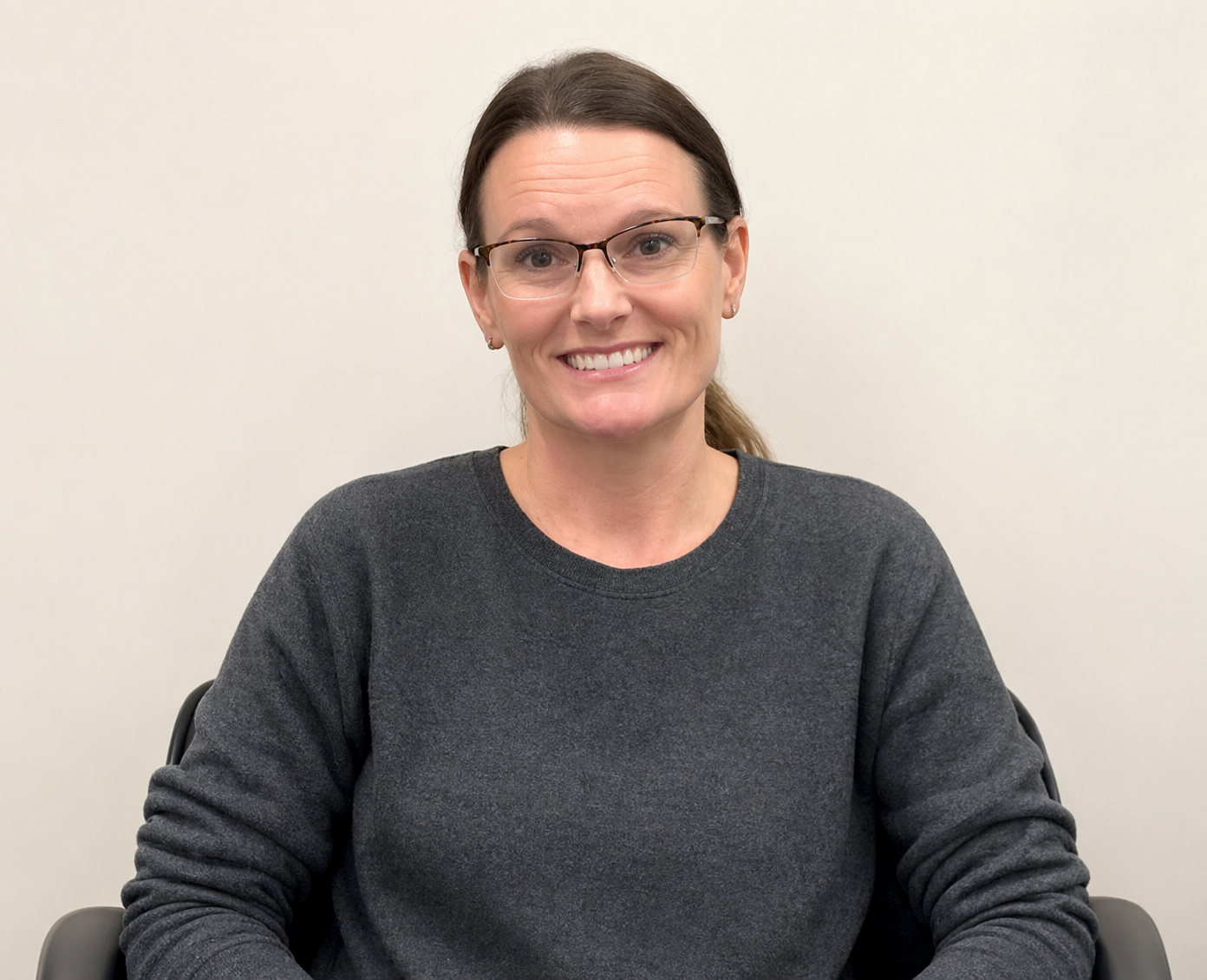
Shannon: From 17 Years of Disability to Freedom
How neuromyofascial assessment revealed a treatable mechanical layer beneath a complex neurological diagnosis
I feel better than I did pre-MS. I feel like I have a brand new body.
Shannon
NMF Science patient
17 Years of Progressive Disability
Formal MS diagnosis since age 26 (42 at assessment)
- Partial left-eye blindness from optic neuritis
- Constant left-sided migraines
- MS hug (thoracic band-like pain)
- Left-sided weakness and paresthesias
- Vertigo, balance issues, foot drop
- Bowel and bladder incontinence
- On infusion therapy every 6 months
- Followed regularly by neurological care team
A Physical Trauma Years Before
- History of head-on motor vehicle collision (around 2005)
- Asymmetric whiplash injury to left cervical and thoracic spine
- Left-dominant symptom pattern mapped precisely to injury location
- Additional history of multiple concussions
- Family history of progressive MS (brother, 20-year course)
Neuromyofascial Mapping Reveals
- Deep spinal fibrosis and restriction
- Thoracic retrolisthesis (backward vertebral slippage)
- Nerve root tethering in cervical and thoracic regions
- Widespread myofascial contracture
- These mechanical findings may contribute to or amplify neurological symptom burden
From Struggles to Strength: Shannon's Journey
Shannon was 42 years old when she came to Dr. Lamb’s clinic in late October 2022. She had lived with a formal Multiple Sclerosis diagnosis for 17 years. Those years had brought progressive, relentless disability.
On her left side, she experienced constant migraines. Her left eye had been partially blinded by optic neuritis, a loss of vision that had persisted for years. She felt the MS hug constantly: a crushing, band-like pressure across her thoracic spine as if someone were always squeezing her from the inside. Her left arm and leg were weak. She experienced tingling and numbness that never fully resolved. She had vertigo bad enough to cause falls. Her bowel and bladder function had become unpredictable and limiting. Despite years of infusion therapy and regular neurological monitoring at a tertiary MS clinic, her trajectory was downward.
Her medical team expected the decline to continue. They told her to prepare for worsening disability, for the eventual loss of use of her legs.
But Shannon’s history held a clue that standard neurological evaluation had not connected to her MS symptoms.
The Collision and Its Aftermath
Years earlier, around 2005, Shannon had been in a head-on motor vehicle collision. The impact had thrown her into a severe, asymmetric whiplash injury concentrated on her left side. The injury affected her cervical and thoracic spine. In the immediate aftermath, she had recovered from the acute phase. But her neuromuscular system had not fully resolved the structural damage. Deep fibrosis had formed. Vertebrae had shifted. Nerve roots had become tethered.
What made this significant was that Shannon’s MS symptoms followed a strikingly left-dominant pattern. Her migraines: left side. Her vision loss: left eye. Her weakness and numbness: left arm and leg. Her balance issues: left-sided falls. The MS hug: left-sided pressure.
The anatomical distribution of her symptoms matched the location of her old whiplash injury.
Comprehensive Neuromyofascial Assessment
In October 2022, Dr. Lamb performed a comprehensive neuromyofascial assessment. This detailed structural evaluation looked beyond the MS diagnosis to identify mechanical factors that might be contributing to Shannon’s symptom burden.
The assessment revealed significant spinal pathology: deep fibrosis throughout the cervical and thoracic regions, thoracic retrolisthesis, nerve root tethering, and widespread myofascial restriction. These mechanical findings did not cause her MS. But they appeared to be amplifying her neurological symptoms and limiting her functional recovery.
The hypothesis was straightforward: if these mechanical restrictions could be identified and released, Shannon’s symptom burden might decrease substantially, regardless of whether the underlying demyelinating disease changed.
The Intervention and Immediate Response
On December 22, 2022, Shannon received her first targeted treatment. The procedure focused on the specific spinal segments where fibrosis and tethering had been identified in the cervical, thoracic, and lumbar regions. The intervention was designed to release mechanical restriction and decompress tethered nerve structures.
Within minutes, before she left the treatment room that day, Shannon noticed changes.
In her own words from the video recorded that day: “I feel like there’s no pressure. There’s no headache. When’s the last time you had no headache? I can’t remember. I feel like my vision’s clear. I feel like it doesn’t have that weird blur I had. Everything’s lighter. I feel like I have more feeling and I’m lighter.”
Her left arm, which had been restricted to 90 to 120 degrees of motion, could suddenly lift fully overhead. The MS hug was gone. Her balance, which had been shaky, improved immediately. Her hands, which had been numb and tingling since diagnosis, had restored sensation and function.
These immediate improvements were dramatic. But Shannon understood, and Dr. Lamb explained, that there was more work to do.
Building the Gains
Over the following weeks, Shannon received additional targeted treatments in early January 2023. Each treatment addressed different segments identified in her assessment. Each treatment produced functional improvements that stacked on top of the previous gains. With each intervention, more of her neuromuscular system found relief.
The Sustained Recovery
By February 2023, six weeks after her first treatment, Shannon returned for follow-up. The improvements had held steady. She reported no headaches, something she could not have said in 17 years. Her vision remained clear. The MS hug had not returned. Her strength and sensation continued to improve. She was not taking additional medications beyond her regular MS infusion therapy, scheduled for every six months as part of her ongoing neurological care.
By June 2023, six months after her initial treatment, Shannon’s functional recovery had consolidated into her new normal.
She could use stairs independently, something she had not been able to do safely in years. She could wear high heels for the first time in years. She could dance. She could stand on one leg with stability. She could lift both arms fully overhead without restriction. She reported no remaining MS symptoms.
Most remarkably, she was living without the daily fear of progressive decline that had defined her previous 17 years.
At her six-month follow-up, Shannon reported: “I feel better and free than I did. Free. I feel like I have a brand new body, and I’m able to advance back into this area and system. I can do that being utilized for the first time before you able to use stairs. I myself… I feel so good and right lately. That is all they’ve done.”
What This Means
For context: in MS, natural relapse recovery typically unfolds over three to six months. Patients often reach a plateau and do not return to full baseline. The speed and breadth of Shannon’s functional improvement, across vision, motor function, balance, sensation, and autonomic domains, within weeks, then sustained and continuing to improve through six months, is atypical for standard MS natural history.
This does not mean Shannon’s underlying MS diagnosis has been cured or reversed. The demyelinating disease process remains unchanged. What it suggests is that a treatable mechanical and neuromyofascial component was superimposed on her neurological condition, and that removing mechanical restriction created space for substantial functional recovery.
Shannon’s case demonstrates that patients with complex neurological diagnoses may benefit from systems-informed assessment that identifies and addresses mechanical contributors alongside standard medical management.
Today
As of 2026, Shannon continues to maintain the functional gains achieved through treatment, with ongoing quality of life improvements. She remains engaged with her neurological care team and continues to benefit from periodic maintenance treatment as part of her comprehensive care approach.
Clinical Context and Important Limitations
This is a single clinical case observation. It does not establish that neuromyofascial pathology is the universal cause of MS, nor does it imply that targeted intervention cures or reverses the underlying autoimmune demyelinating disease.
Shannon’s outcome represents one patient’s experience. Different patients at different stages of MS disease may respond differently. Research shows that outcomes in neuromyofascial intervention can range from modest functional improvements to substantial symptom resolution, depending on patient factors, disease stage, and the extent of mechanical pathology identified.
The speed and breadth of improvement Shannon experienced, immediate procedural effects followed by continued gains over 10 to 14 days and sustained over 6+ months, should not be expected as a standard outcome. Response to treatment varies significantly based on individual anatomy, disease progression, and mechanical factors present.
This case is presented as a hypothesis-generating clinical observation suggesting that mechanical and neuromyofascial factors may contribute significantly to symptom burden in some patients with MS. Further controlled research is needed to investigate the prevalence, mechanisms, appropriateness of patient selection, and long-term durability of such interventions in larger MS populations.
Shannon’s care included both targeted intervention and ongoing maintenance treatment. The relative contributions of initial intervention versus periodic maintenance care to long-term stability have not been separated.
If you are living with MS or other neurological conditions, continue to work with your neurological care team. This content is educational and informational only and does not constitute medical advice or a treatment recommendation.
Watch Shannon's Journey
In this video, Shannon shares her 17-year MS journey and documents her functional changes from initial assessment through six-month follow-up. The video includes baseline demonstration of her symptoms, immediate post-treatment improvements, and longer-term follow-up showing sustained functional gains. Clinical guardrails regarding outcomes and patient variability apply. See the information above.
Full formal case report documenting Shannon’s neuromyofascial assessment, targeted intervention protocol, functional outcomes measured over 12+ months, and clinical discussion of findings within the context of MS natural history.
Learn about the neuromyofascial science approach to assessment and how mechanical spinal pathology may contribute to symptom burden in neurological conditions. Understand the mechanisms, terminology, and clinical reasoning behind Shannon’s assessment and treatment.
Peer-reviewed research summaries, slideshows, and additional case studies related to MS, neuromyofascial science, and systems-informed approaches to neurological symptom management.
Watch additional patient stories, condition explainers, and educational content from Dr. Lamb and the NMF Science team exploring the neuromyofascial approach to complex chronic conditions.
KEY TAKEAWAYS
What Shannon’s Story Suggests
Shannon’s case raises important questions about the role of mechanical and neuromyofascial factors in MS-related disability:
Patients with long-standing neurological diagnoses may have superimposed mechanical pathology that is identifiable and treatable through systems-informed assessment.
In Shannon’s case, left-dominant symptom distribution mapped to the location of a previous whiplash injury, suggesting the mechanical history was clinically relevant.
Immediate functional improvements following mechanical intervention, followed by continued gains over days and weeks, suggest that released mechanical restriction may create conditions for neurological recovery.
Response to intervention varies by patient, disease stage, and mechanical factors present. Outcomes are not guaranteed and should not be generalized.
A systems-informed approach that identifies mechanical contributors alongside standard neurological care may enhance quality of life and functional capacity in selected patients.
These observations suggest further research is warranted to investigate neuromyofascial factors in MS populations and to identify which patients might benefit from this approach.
CALL-TO-ACTION
Learn More About Your Symptoms
If you are living with MS, fibromyalgia, post-concussion syndrome, chronic pain, or other complex neurological symptoms, understanding the role of mechanical and neuromyofascial factors may be relevant to your care.
Explore: The MS Condition Page for detailed information about the neuromyofascial approach to MS The Clinical Resources page for peer-reviewed research and additional case studies Dr. Lamb’s educational content for deeper understanding of mechanisms and assessment
For clinical inquiries or collaboration: Visit the Collaborate page Contact our team for practitioner-focused information
Educational Disclaimer
This content is provided for educational and informational purposes only and does not constitute medical advice, diagnosis, or treatment recommendation.
Shannon’s case represents a single patient’s experience. The outcomes described should not be generalized to all patients with MS or other conditions. Response to assessment and intervention varies based on individual factors including disease stage, mechanical pathology present, prior treatment history, and other variables.
If you are experiencing MS symptoms or other health concerns, please consult with your primary care physician, neurologist, or other qualified healthcare provider. Continue any prescribed treatments and follow-up care with your medical team.
NMF Science does not provide medical treatment, clinical consultations, diagnoses, or personal medical advice to patients. This content is educational only.
WHERE TO BEGIN
Start Here
What is Neuromyofascial Science?
A precision-based clinical framework developed by Dr. G. Blair Lamb to map the specific anatomical drivers behind chronic pain, neurological dysfunction, and complex conditions. NMFS goes beyond diagnosis to investigate what is actually generating your symptoms and why.
What is TNPC?
Transcutaneous Neuromyofascial Precision Care is a proprietary approach developed by Dr. G. Blair Lamb to address the specific sites of pathology identified through the neuromyofascial mapping process. TNPC encompasses a range of precision-based interventions tailored to each patient’s unique map, working to address structural drivers at their source rather than managing symptoms alone.
About Dr. G. Blair Lamb
Dr. G. Blair Lamb is the developer of Neuromyofascial Science and a pioneer in patient-specific injury mapping for complex chronic conditions. With more than 30 years of clinical innovation and multiple patents in neuromyofascial treatment methods, Dr. Lamb has dedicated his career to building a more precise understanding of what drives chronic pain and neurological dysfunction.