Most of what I know about chronic spinal pain, I first learned from my own body.
In 1992, I sustained complex spinal injuries from a diving accident. The impact was catastrophic. I was a physician, and I went looking for the best available care. What I found was a system that was very good at identifying what was structurally wrong but far less equipped to address why recovery stalled or what to do when standard rehabilitation reached its limit.
Over several years, I recovered. The process required me to develop approaches that did not yet exist in any coherent clinical framework. That experience became the foundation of everything I have built since.
The Problem I Kept Seeing
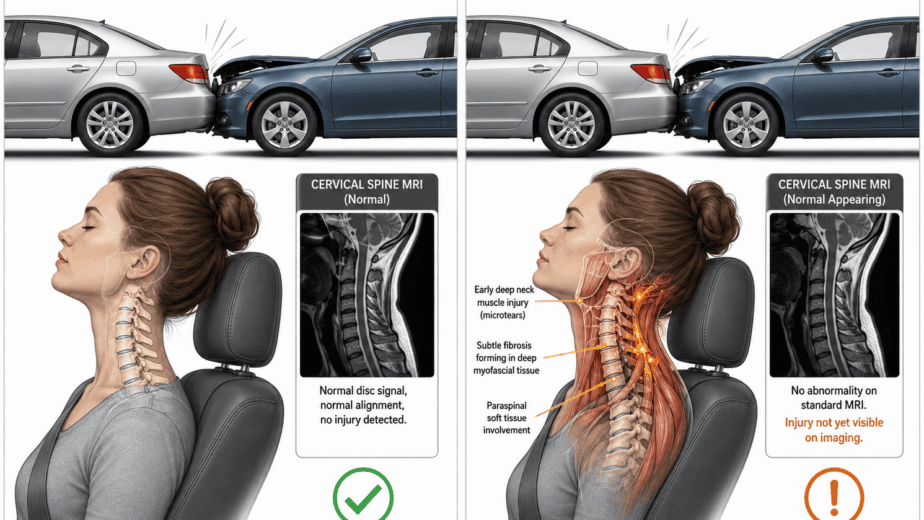
The patients who came to me were not unusual. Many had been in accidents, sustained sports injuries, or accumulated damage over years of demanding physical work. They had been through imaging, physiotherapy, specialist referrals. Many had been told their imaging was normal or that there was nothing further to offer.
That experience is documented in the literature, and it has a name. Writing in the Journal of Bioethical Inquiry, Buchman, Ho and Goldberg examine what they describe as epistemic injustice in chronic pain: the pattern in which pain sufferers find their own testimony about their bodies epistemically downgraded. Their argument is not that clinicians are careless. It is that healthcare institutions and practices privilege certain kinds of evidence and ways of knowing, and in doing so can exclude patient testimony from consideration altogether. Their recommendation is epistemic humility on the part of providers.
A broader review of the chronic pain landscape makes a related point, discussing the struggle patients face in trying to legitimize their pain to others, and describing the introduction of chronic primary pain into the World Health Organization’s International Classification of Diseases, 11th Revision. That category exists because a large number of people are in genuine pain that current investigation cannot account for.
My impression, formed over years of clinical work, is that the investigation often stops earlier than the problem requires, or looks with tools not designed to find what is there.
There is a concrete example of exactly that. Fat and water MRI of the deep cervical muscles after whiplash detects measurable structural change within two weeks of injury in patients who go on to do badly, at a point when routine imaging is reported as normal. The authors of that work concluded that routine imaging protocols may need to be reconsidered. A patient told their scan is clear has been told something true about the scan, not something conclusive about their tissue. I have written about that research in more detail in When the MRI Says Normal But the Pain Says Otherwise.
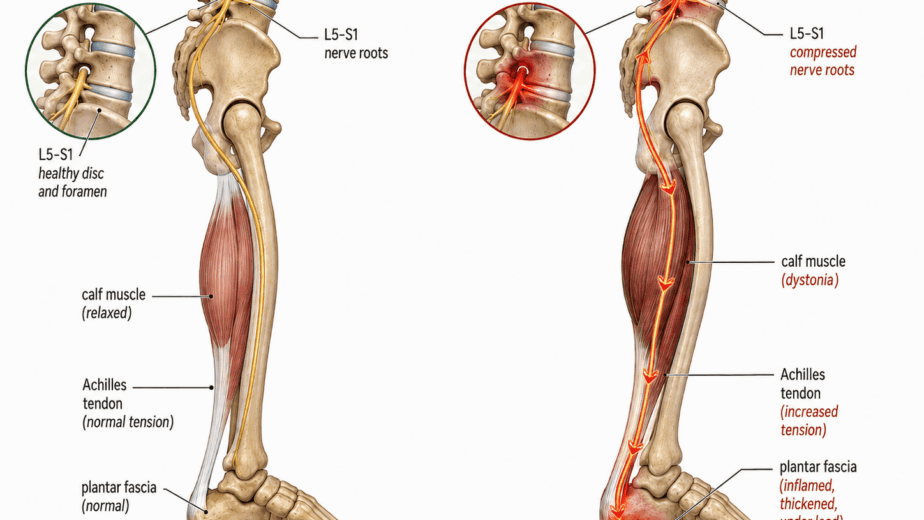
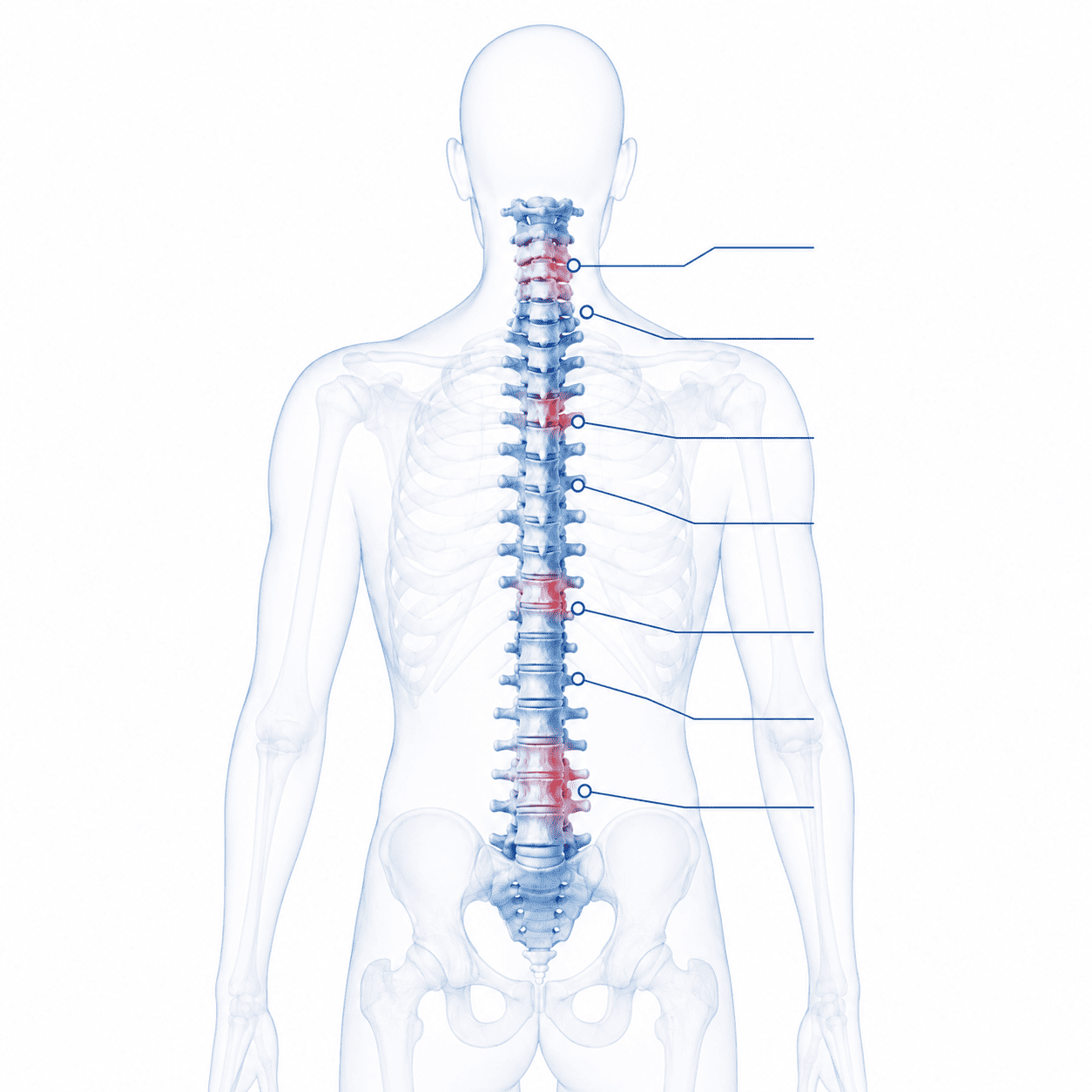
What I observed over years of practice was a consistent pattern: chronic pain frequently did not appear to live in isolation in one tissue or one joint. It looked like the downstream result of accumulated neuromyofascial injury across multiple sites. My clinical experience has been that those sites can often be identified and mapped, and that doing so changes what care is directed at.
That is the central premise of Neuromyofascial Science. Not that pain is imaginary when imaging is normal. Not that patients simply need to manage and adapt. But that specific structural contributors to persistent symptoms can often be found when you know what to look for and how to look for it.
It is a premise rather than a proven finding. Testing it properly is the work ahead, and it is why NMF Science is pursuing independent methodological review and prospective research rather than treating three decades of clinical observation as sufficient on its own.
What the Framework Investigates
A diagnostic label tells you what a patient is experiencing. Neuromyofascial Science asks what may be generating the experience.
For any given patient, that question requires building a map: a reconstruction of their injury history, the tissues involved, the neural pathways that may be under load, the sites where fibrosis and scarring appear to have altered normal anatomy and mechanics. The map is specific to the individual. Two patients with the same diagnosis may have entirely different underlying injury patterns, which is one possible reason why standard protocols produce such variable results.
The investigation follows a simple logic. Symptoms are treated as information. Where pain refers, how it behaves with movement, what other symptoms accompany it, when it started and how it has evolved: all of this points toward specific anatomy. The goal is to work backward from the symptom toward the sites that may be driving it.
That logic is not unique to this framework, and it is not speculative in principle. Referred pain is a well-established phenomenon with documented examples. Nociceptive afferents from the upper cervical nerves converge with trigeminal afferents in the trigeminocervical nucleus, which is why neck structures can refer pain into the face and head. Maigne syndrome describes a disorder of the thoracolumbar junction that typically presents as pain in the lower abdomen, pelvis, and groin, and is described in the literature as an often unrecognized and treatable cause of low back pain. What Neuromyofascial Science proposes is that this principle applies more widely in chronic pain than current practice tends to assume.
Developing the Clinical Approach
The investigational framework needed clinical tools to match it. Over three decades of practice and research, I developed and refined an approach designed to address neuromyofascial findings directly rather than managing symptoms at the surface. That approach is delivered as Transcutaneous Neuromyofascial Precision Care, or TNPC, within my medical practice in Ontario.
TNPC is not a single technique applied uniformly. It encompasses a range of precision-based interventions selected according to what an individual patient’s map indicates, with the intensity of the approach matched to the stage and extent of the findings.
What the framework has been applied to over that period spans chronic pain and post-injury presentations across the spine and limbs, including patients whose symptoms have not resolved through standard care. I am deliberately not presenting that as a list of conditions the approach treats successfully. Individual outcomes vary, the published evidence base for this approach consists of self-published case observations rather than controlled trials, and claiming more than that would misrepresent where the work stands.
What This Means for Patients
The patients I see have often already been through the standard pathway. They have not failed medicine, and medicine has not failed them through indifference. In many cases the tools available were not designed to find what their injury pattern involved.
Neuromyofascial Science does not position itself against standard care. Appropriate medical workup, imaging, neurology, and specialist assessment are all part of a complete picture, and patients should continue with the care their physicians recommend. What NMFS proposes to add is a more granular investigational layer, focused on identifying neuromyofascial findings that may be contributing to persistent symptoms when standard findings appear normal or standard treatment has reached a ceiling.
The question I keep returning to is a straightforward one. When a patient is still in pain after every standard option has been tried, is it more likely that nothing is wrong, or that a question has not yet been asked?
Three decades of clinical work have made me think it is usually the second. Establishing whether that instinct holds up under formal investigation is the next piece of work, and it is the one that matters most.
The information in this article is educational and informational in nature. It is not intended as a substitute for professional medical advice, diagnosis, or treatment. If you are experiencing chronic pain, consult with a qualified healthcare provider to discuss the options appropriate for your situation.